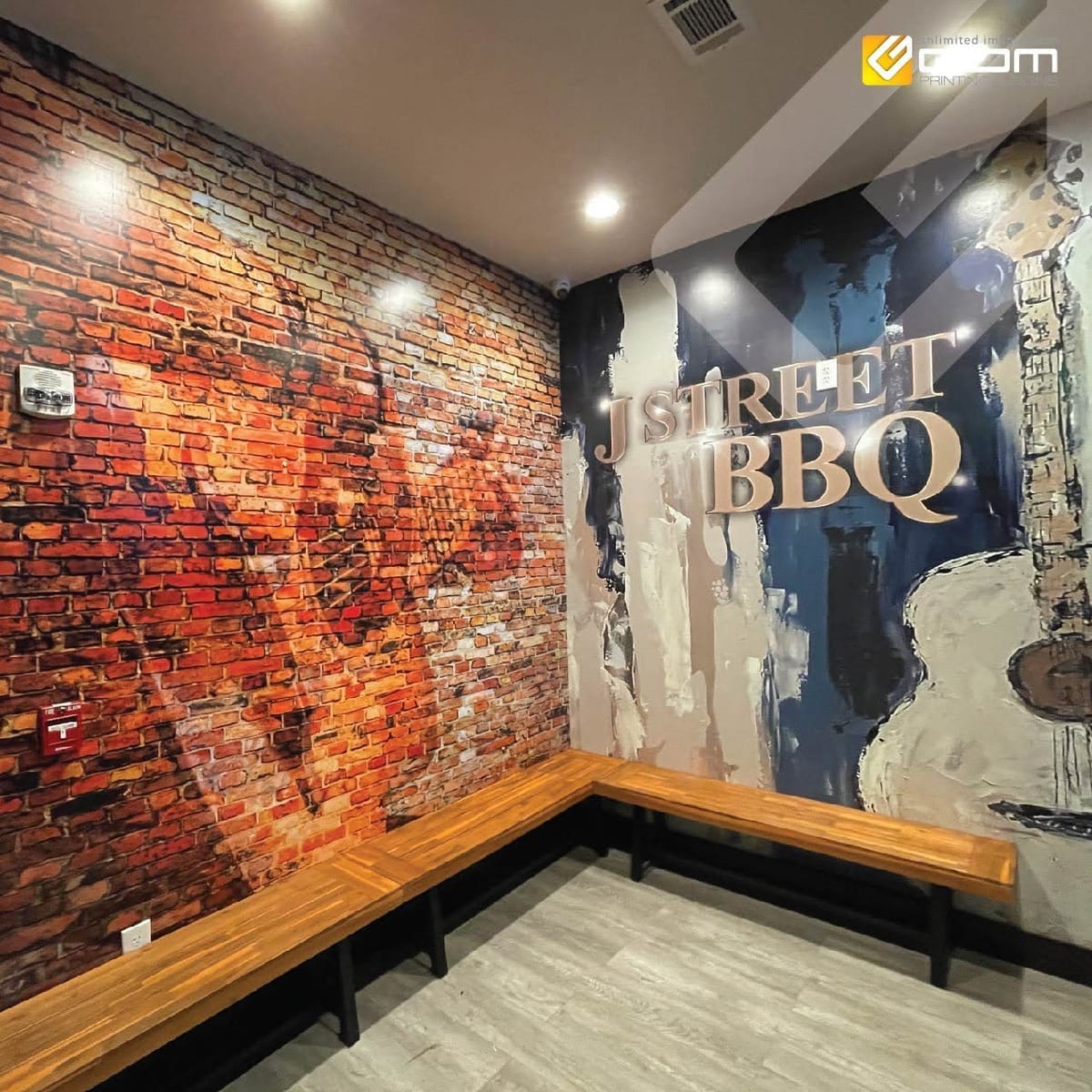
Walk into almost any busy restaurant in Metro Atlanta, from a barbecue joint in Norcross to a Korean spot on Pleasant Hill Road in Duluth to a new fast-casual place in Alpharetta, and you will notice that the walls are doing some of the work. A big printed mural behind the booths, a brick-look wall in the waiting area, a bold logo wall people line up to take photos in front of. None of that is an accident. Wall graphics are one of the quickest ways to give a dining room personality, and they cost far less time and disruption than most renovations. Here is a practical look at how restaurants use them, what materials hold up, and how to plan a wall that looks great on opening day and still looks great a few years later.
What Restaurant Wall Graphics Actually Are
Most restaurant wall graphics are large-format prints on vinyl or wallcovering material, sized to the exact wall and installed in panels. The artwork can be anything you can design: a hand-painted look, a photo of your city, a pattern built from your logo, a faux brick or wood texture, or a full illustrated mural. Once it is up and the seams are matched, it reads as one continuous piece of art rather than a printed sheet.
Wall graphics are not the same as a painted mural. A painted mural is done by hand on site and can take days or weeks of an artist working in your space. A printed wall graphic is designed and proofed ahead of time, printed in the shop, and installed in a much shorter window. Many restaurants get the best of both by having an artist create the artwork digitally and then printing it, so they get the hand-made look without shutting down the dining room while it is painted.
Where Wall Graphics Make the Biggest Difference
The waiting area. This is where guests stand and look around with nothing else to do. A strong wall here sets the tone before anyone sits down and gives people something to photograph and post while they wait.
The feature wall in the dining room. Most dining rooms have one wall everyone faces or sees first when they walk in. That is the wall to spend your design energy on. A mural behind a row of booths or along a long banquette turns a plain room into a space with a clear identity.
The counter and ordering area. For quick-service and fast-casual restaurants, the wall behind or beside the counter is prime real estate. Graphics there can carry your brand story, your signature items, or simple directional cues so guests know where to order and where to pick up.
Hallways, restrooms, and patios. These spaces are easy to forget, but a small graphic in a hallway or restroom shows the same attention to detail as the rest of the room. Covered patios can take graphics too, as long as the material is chosen for outdoor use.
Choosing the Right Material
Not every wall graphic is made the same way, and the material matters more in a restaurant than almost anywhere else. Dining rooms see grease, steam, splashes, chairs bumping walls, and nightly wipe-downs. A few things to talk through with your sign company:
Adhesive vinyl. Printed adhesive vinyl is the most common choice for smooth, painted walls. It goes up fast, it can be laminated for extra protection, and depending on the product it can be removed later. It works best on walls that are smooth and properly painted.
Textured wall surfaces. Brick, block, and heavily textured walls need a material designed to conform to texture, and sometimes a different installation method. Not every vinyl will sink into mortar lines and stay there, so be upfront about your wall surface when you ask for a quote.
Wallcovering. Printed wallcovering is closer to a commercial wallpaper and is a good fit for large, long-term installations. It can be a better match for some walls and some fire code requirements, which is worth asking about for any big interior install.
Lamination. A clear laminate over the print adds a layer that can stand up to regular cleaning and scuffs. In high-touch spots like booth backs, counters, and hallways, laminate is usually worth it. A matte finish also helps cut down glare from your lighting.
Fire ratings and building rules. Commercial interiors can come with fire code and building requirements for wall finishes, and some landlords and shopping centers have their own rules. If you are in a newly built-out space, ask your contractor or landlord what is required before you pick a material. A good sign company will help you match the product to the requirement.
Planning the Artwork
The best restaurant walls start with a simple question: what do you want guests to feel and remember? A few things that help:
Tie it to your brand and your food. A barbecue spot might lean into brick, wood, and music. A Korean restaurant might use bold color, calligraphy, or a modern take on traditional patterns. A coffee shop might use soft illustration and a clever line of copy. The wall should feel like it belongs to your restaurant and nobody else's.
Think about the room, not just the wall. Booths, light fixtures, outlets, vents, TVs, and menu boards all sit on or in front of your walls. Good design plans around them so the key part of the artwork is not hidden behind a booth or cut in half by a thermostat. We measure on site for this reason.
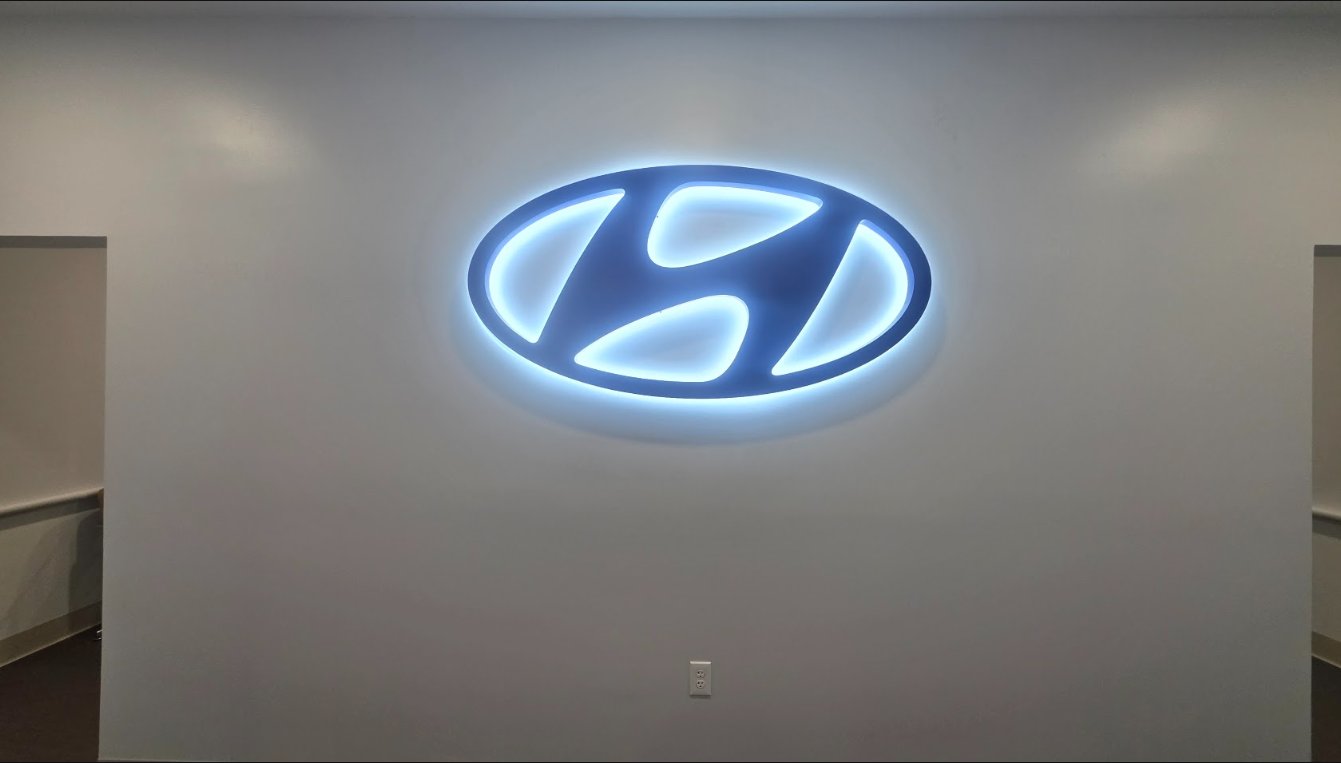
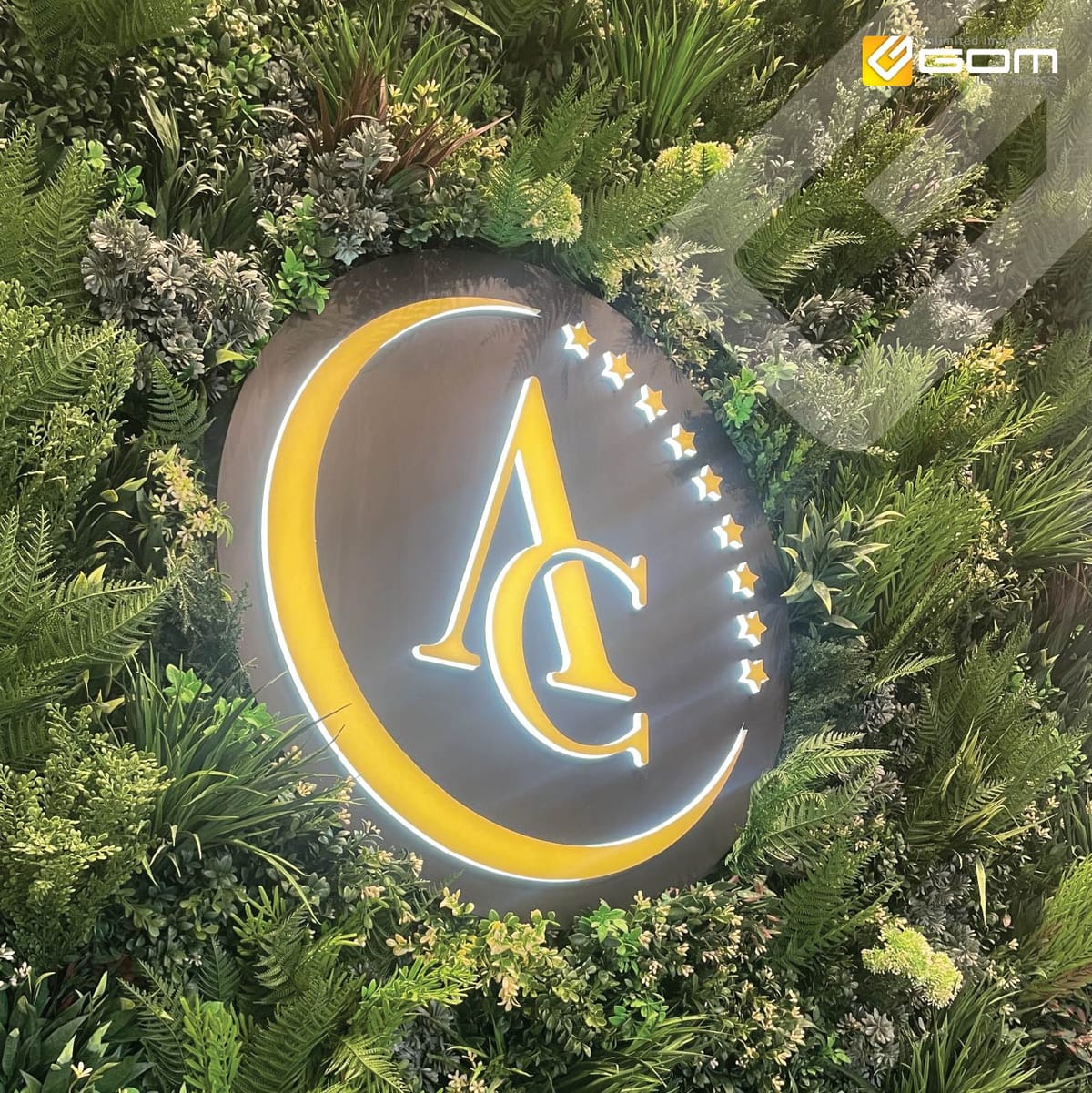
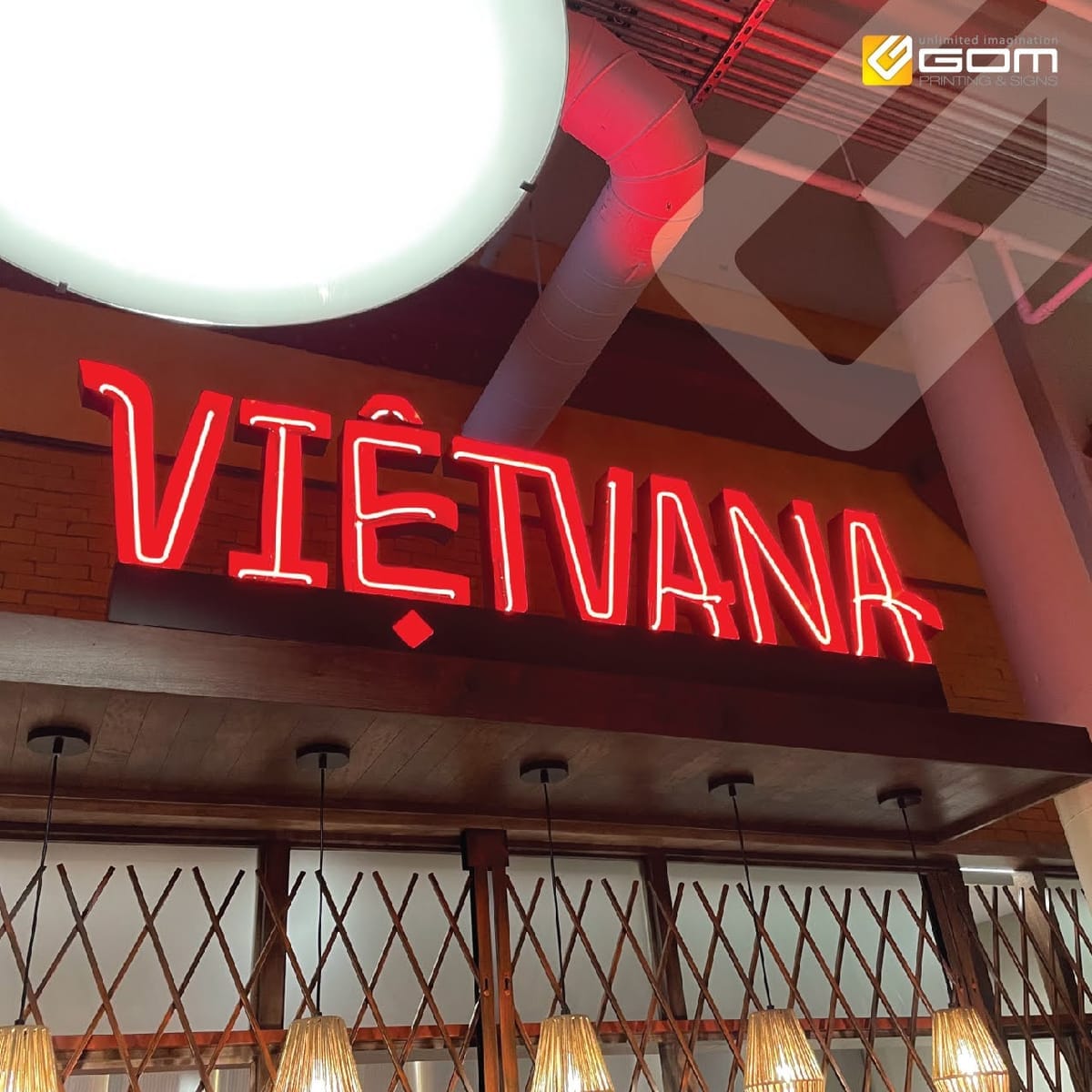
Leave room for a photo moment. A logo, a short line of copy, or a dimensional sign mounted on top of the graphic gives guests an obvious spot to take a picture. Combining a printed wall with raised letters or a lit sign adds depth and makes the whole thing look more finished. Our post Front-Lit vs. Halo-Lit vs. Back-Lit Channel Letters covers lighting options if you want a glowing logo on your feature wall.
Use high-resolution artwork. A wall graphic can be many feet wide, and anything that is enlarged too far will look soft or pixelated up close. If you are supplying photos or art, ask your sign company what file sizes and formats they need. If you do not have artwork, our design team can create it.
What to Expect on Install Day
A typical restaurant wall graphic project goes like this: we measure the space, design and send a proof sized to the real wall, print and laminate the panels in our Norcross shop, and then install. Walls need to be clean, dry, and properly painted for adhesive products, and new paint generally needs time to cure before vinyl goes on it, so let us know if the walls were just painted.
Installation is usually much faster and less disruptive than a remodel. Many restaurants schedule it before opening hours, on a closed day, or during a slow stretch, so the dining room stays open. For a new build-out, we work around your contractor and opening date so the graphics are up before your soft opening.
Keeping Your Walls Looking Good
Once your graphics are up, care is simple. Wipe them down with a soft cloth and a mild cleaner, and skip harsh solvents and abrasive scrubbers, which can dull or damage the print. Keep an eye on edges and seams in high-traffic spots and call us if anything starts to lift, because a small fix early is easier than a big one later. Our post Sign Maintenance Tips to Extend the Life of Your Investment has more on keeping signs and graphics in good shape.
One more advantage: when you update your menu, rebrand, or just want a fresh look, printed graphics can be replaced without tearing out walls. That makes them a smart fit for restaurants that like to refresh every few years.
Do Not Forget the Outside
The inside of your restaurant only works if people come through the door. The same design that goes on your feature wall can carry through to your storefront windows, your channel letters, and even your delivery or catering vehicles so your brand looks the same everywhere. Our guide Storefront Window Graphics: What Metro Atlanta Businesses Should Know Before Ordering covers the glass, and Indoor Signs That Improve Customer Experience and Reinforce Your Brand covers menu boards, lobby signs, and wayfinding.
Why Restaurants Work With GOM Signs
GOM Signs designs, prints, fabricates, and installs everything in-house out of Norcross, so your wall graphics, window graphics, and building signs can come from one team with one consistent look. We serve restaurants, cafes, and food businesses all over Metro Atlanta, including Duluth, Suwanee, Lawrenceville, Doraville, Alpharetta, and the City of Atlanta, and we serve clients throughout Georgia, Alabama, Tennessee, South Carolina, North Carolina, and Florida.
Get a Quote on Your Restaurant Wall Graphics
Got a blank wall that should be working harder? Send us a photo of the wall, rough measurements, and any logo or artwork you already have, and tell us the feel you are going for. We will turn around a quote in about 48 hours. Call us at 678.205.0408 or request a quote through our website, and let us help you build a dining room people remember.