If your business sits back from the road, shares a shopping center with a dozen other tenants, or depends on drivers spotting you in time to turn in, the sign on your building is only half the job. You also need a freestanding sign out by the road. In Metro Atlanta, that almost always comes down to two choices: a pylon sign or a monument sign. They do the same basic job, putting your name where traffic can see it, but they look different, fit different sites, and go through approvals differently. Here is a plain-spoken breakdown so you can walk into a quote knowing which one makes sense for your property.
What Is a Pylon Sign?
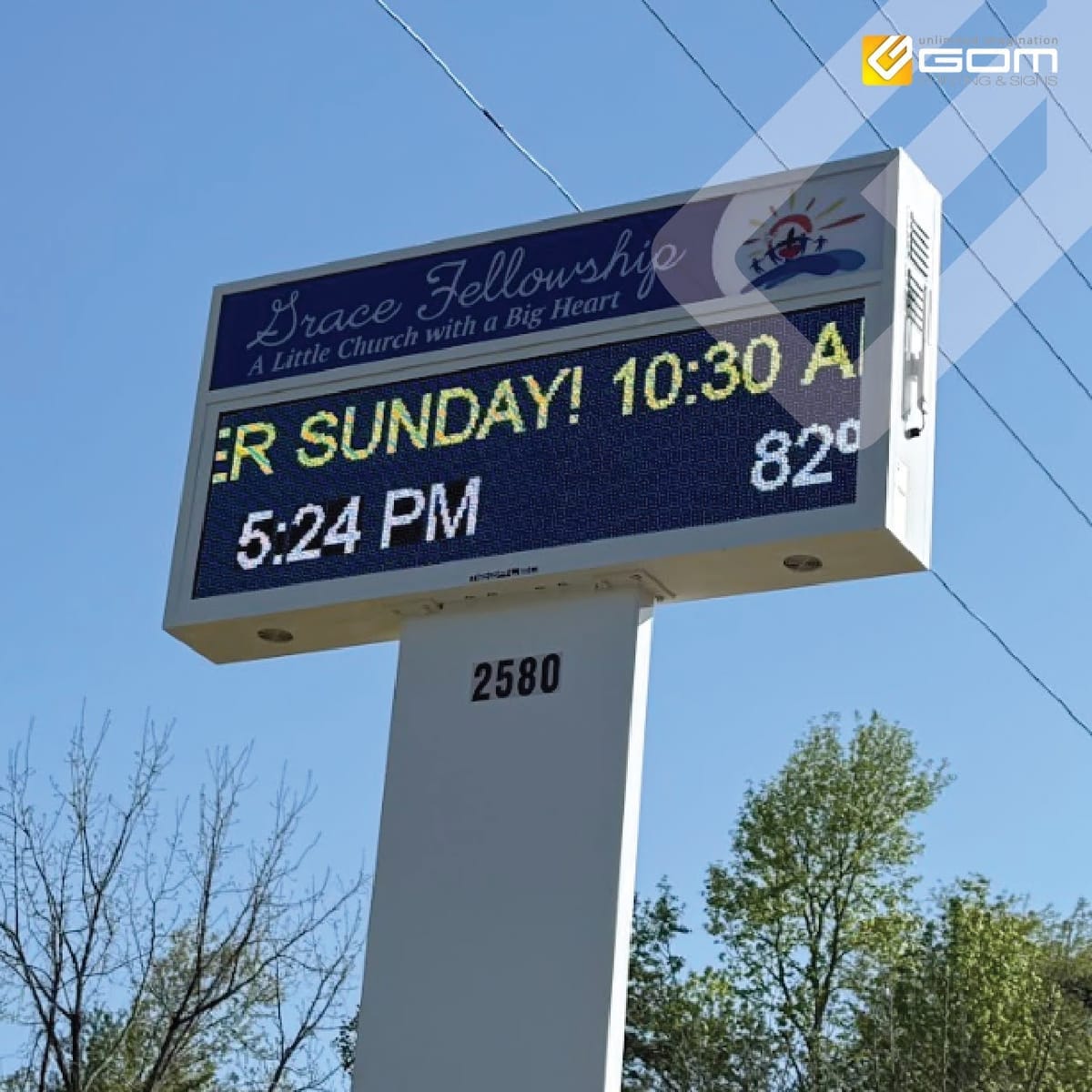
A pylon sign is a tall freestanding sign raised up on one or more poles or columns. The sign cabinet or panels sit well above the ground, so they can be seen over parked cars, landscaping, and other traffic. You see them along the big commercial corridors around Atlanta: gas stations, hotels, restaurants near interstate exits, auto dealers, and large shopping centers with a long list of tenants.
Older pylons were often a bare steel pole with a box on top. Today most pylon signs are built with a full cover around the poles, called a pole cover or shroud, so the whole structure looks finished and matches the building. Pylons can carry an internally lit cabinet, multiple tenant panels, a logo shape, channel letters on the face, and even an LED message center.
What Is a Monument Sign?
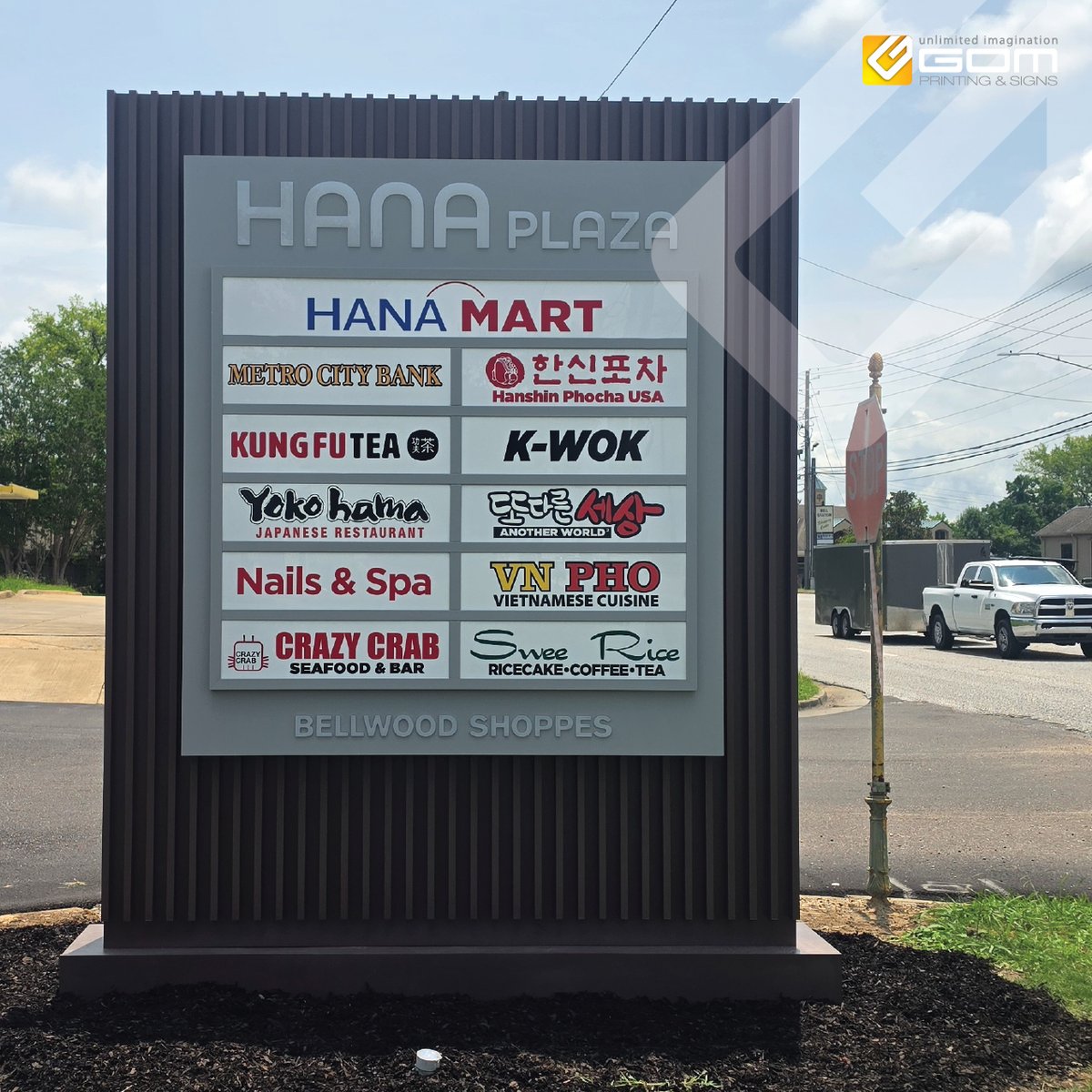
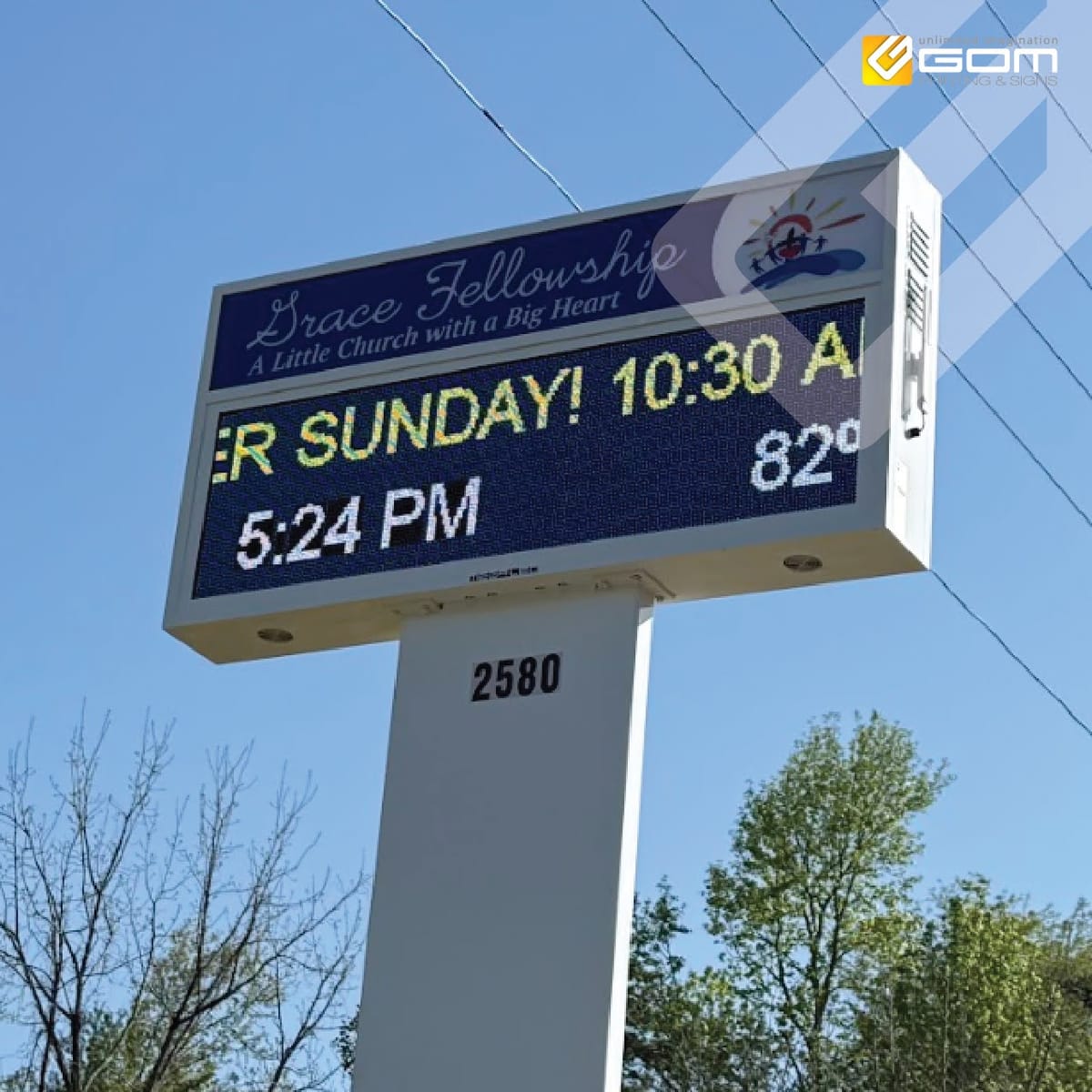
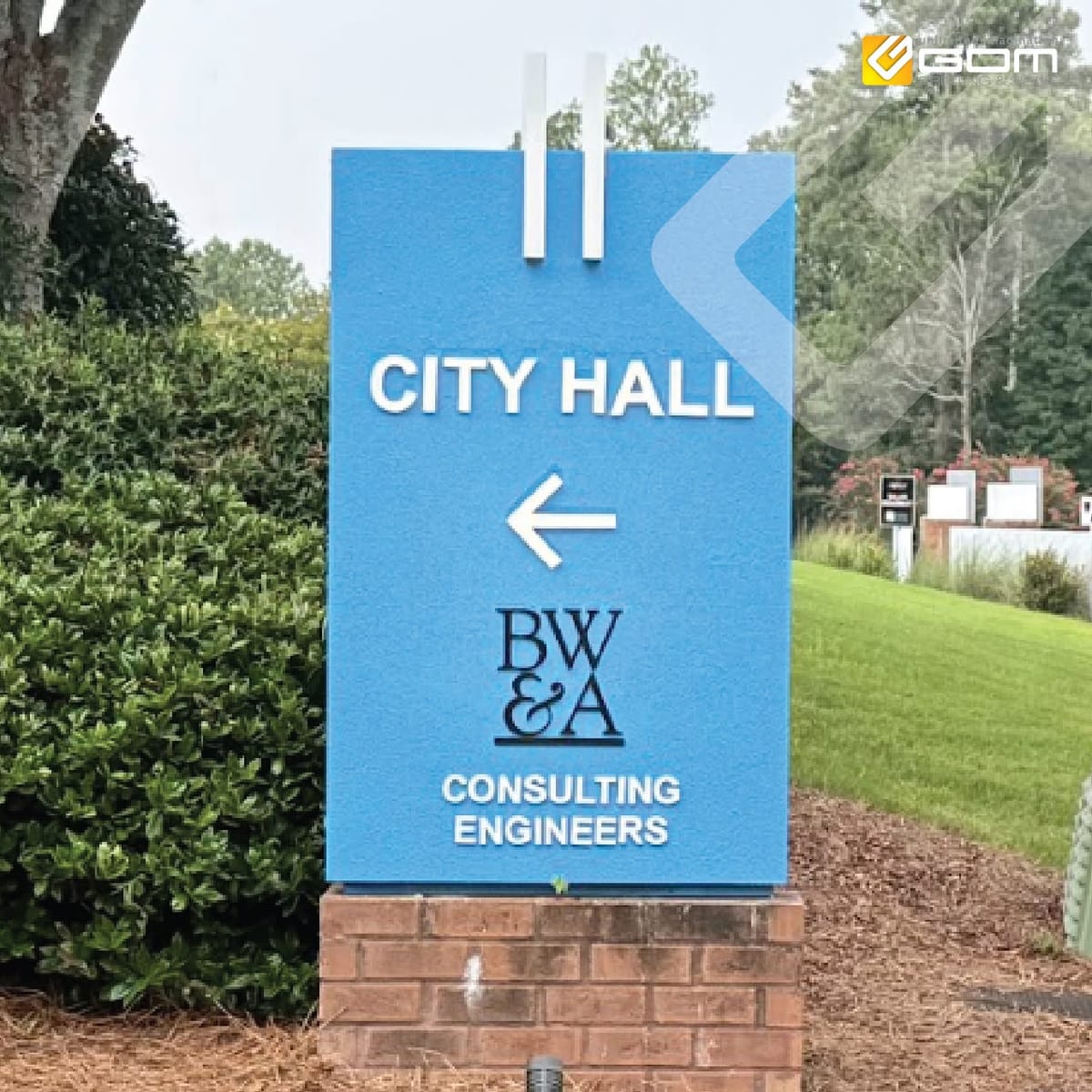
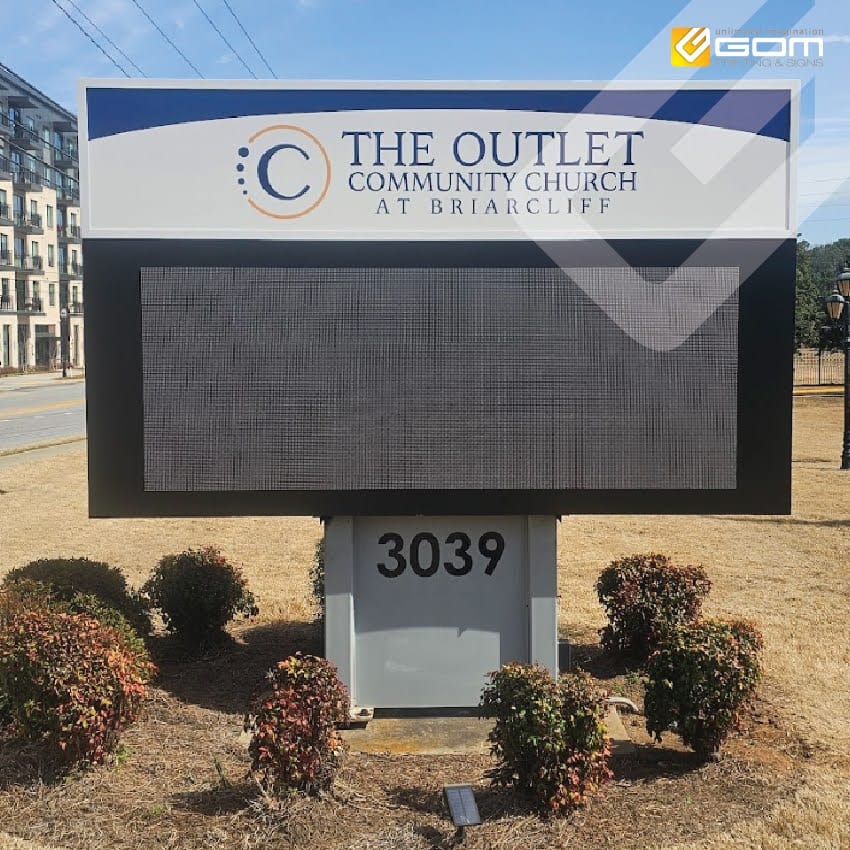
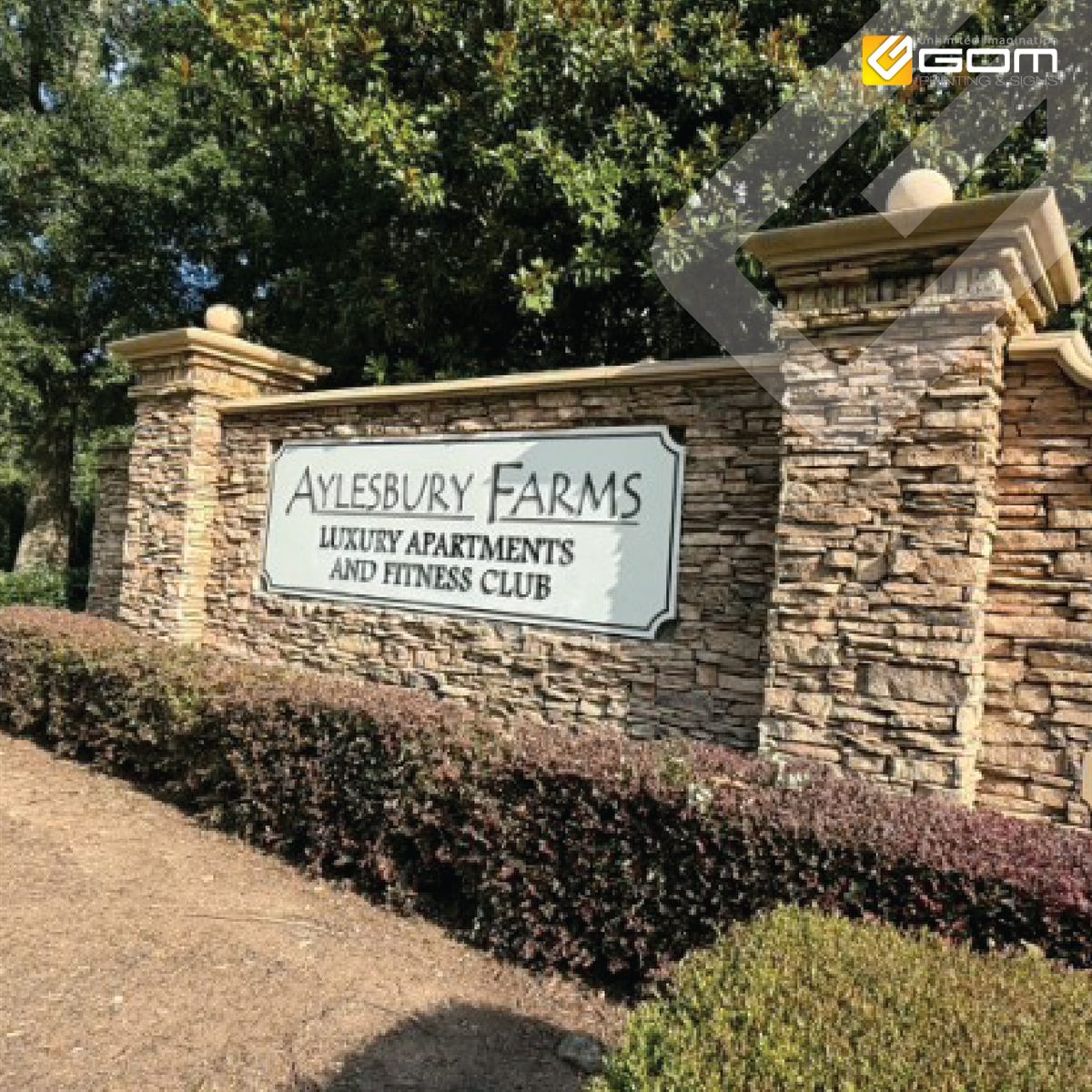
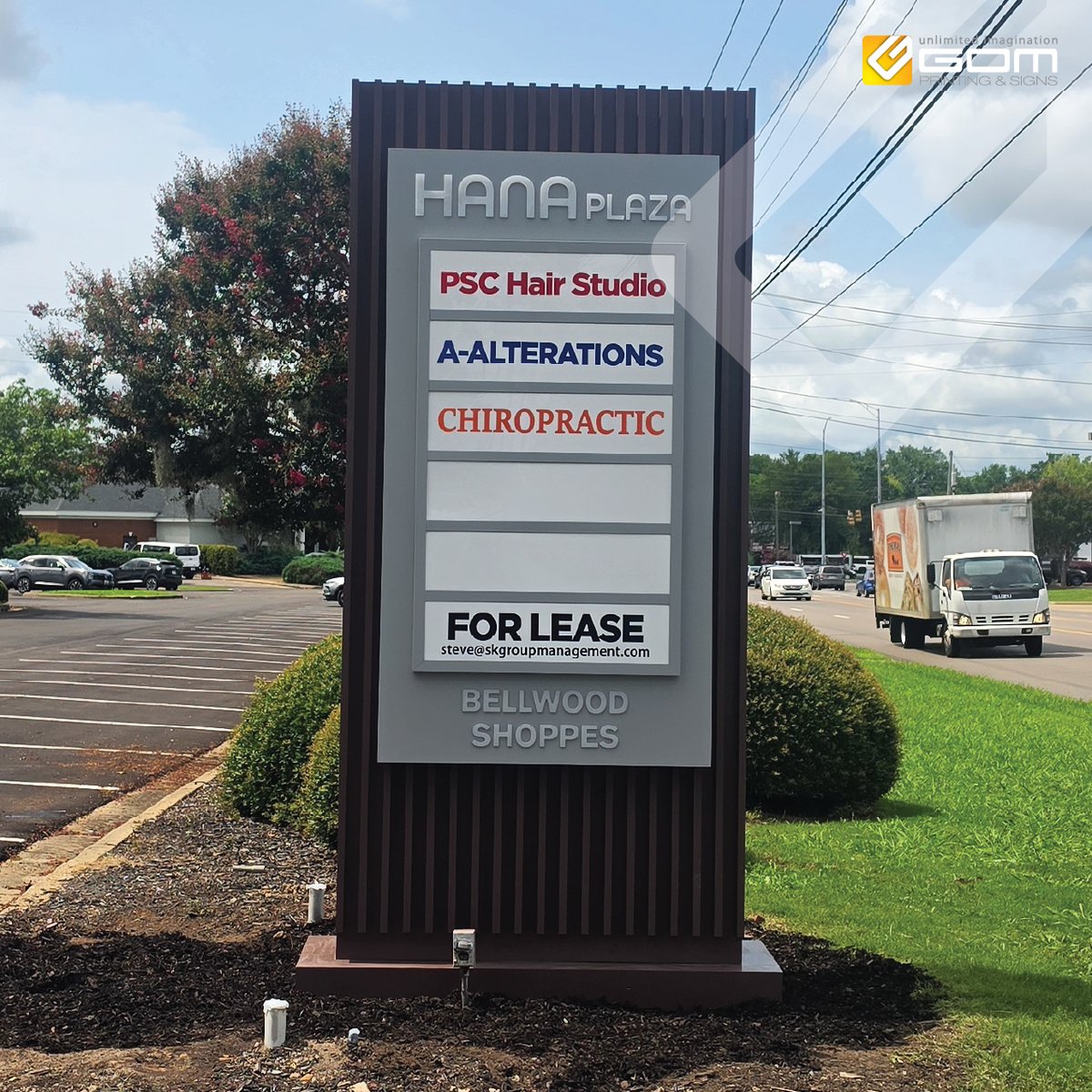
A monument sign is a freestanding sign built low to the ground on a solid base instead of poles. The sign sits at roughly eye level for drivers and people walking by, and the base is often finished in brick, stone, stucco, or painted aluminum to match the building. Monument signs are the common choice for office parks, medical buildings, churches, schools, banks, subdivisions, and neighborhood shopping centers.
Monuments can be lit or unlit, single tenant or multi-tenant, and they are one of the most popular places to add an LED message center. We cover monument signs in more depth in our post Monument Signs: What Business Owners Need to Know Before Buying, on our Insights page.
The Real Differences That Matter
Visibility and distance. A pylon's main advantage is height. Raising the sign above cars and trees lets drivers see it from farther away and earlier, which matters when traffic is moving fast or your entrance comes up quickly. A monument sits lower, so it reads best to traffic that is closer and moving slower, like a local road, a business park drive, or a shopping center entrance.
Look and feel. Monument signs tend to feel more established and polished. A masonry base that matches your building tells people this is a permanent, well-kept property. Pylons feel more commercial and high-traffic by nature. Neither is better; they just send different messages. A dental office and a travel center both want to be found, but they want to feel different when you pull in.
Footprint and site layout. A monument needs more ground space at its base, and it has to sit where low landscaping, parked cars, and grade changes will not block it. A pylon takes up less ground at the bottom, which can help on tight sites, but its height and foundation bring their own requirements. Either way, the sign has to fit around driveways, sidewalks, utilities, and sight lines for drivers pulling out.
Tenant space. Both types can carry multiple tenant panels. A tall pylon can stack a lot of tenants and still keep each one readable from the road, which is why large retail centers often use them. Multi-tenant monuments work well for smaller centers and office buildings where traffic is closer and the tenant list is shorter.
Construction. Both sign types need a properly engineered foundation sized for the sign and the wind loads it will see. Pylons, because of their height, put more demand on the foundation and structure. That is not something to guess at, and in many jurisdictions it is part of what the permit reviewer will want to see.
What Your Local Sign Code Will Decide for You
Here is the part many property owners do not hear until late in the process: in a lot of places, the choice between a pylon and a monument is not entirely yours. Sign codes across Metro Atlanta regulate freestanding signs by height, sign area, setback from the road, spacing, and the number of signs allowed per property or per road frontage. Some cities and overlay districts strongly favor monument signs or limit how tall a freestanding sign can be. Other areas, especially along major highway corridors, may allow taller signs.
Those rules vary from Norcross to Duluth to Doraville to unincorporated Gwinnett, and they change again across DeKalb, Cobb, Fulton, and the City of Atlanta. Rules can also differ by zoning district on the same street. If you are on a property with an existing pylon, do not assume you can simply replace it with a new one of the same size; older signs are sometimes allowed to stay only as long as they are not substantially changed, and a new sign may have to meet current code.
On top of the city or county rules, many shopping centers and business parks have their own sign criteria set by the owner or an association. Those criteria can dictate the sign type, materials, colors, and tenant panel layout. If you lease your space, the landlord usually has to sign off on the drawings before anything goes to the city. We walk through that step in our post Getting Landlord Approval for Your Storefront Sign (Without Losing Weeks).
The practical takeaway: check what your site allows before you fall in love with a design. A good sign company should look at your property, your zoning, and your frontage first, then recommend what will actually get approved.
When a Pylon Sign Usually Makes Sense
A pylon is often the right call when your building sits far back from a busy road, when traffic moves fast and drivers need to see you early to make the turn, when trees, grade, or neighboring buildings block a low sign, when you have many tenants who each need a readable panel, or when you are near an interstate or highway exit and want to catch travelers. In all of these cases, the height is doing real work for your business, as long as your local code allows it.
When a Monument Sign Usually Makes Sense
A monument is often the better fit when your entrance is on a local road or inside a business park, when your brand calls for an upscale, permanent look, when you want the sign to match your building's brick, stone, or stucco, when local code or an overlay district limits freestanding sign height, or when you plan to add an LED message center for a church, school, or community-facing business. Our post How LED Signs Help Churches Increase Community Engagement covers that last use in more detail.
Adding an LED Message Center
Both pylon and monument signs can carry an LED message center, also called an electronic message center or EMC. On a pylon, an LED display is usually built in below the main identification cabinet so it can be read from the road. On a monument, it is typically set into the base design at eye level. Either way, electronic message signs usually come with their own local rules about brightness, how often the message can change, and whether animation is allowed. We design to those rules from the start. For what to look for in the display itself, read What Makes a Good LED Display for Your Business.
Do Not Forget the Site Work
A freestanding sign is a small construction project. Before anything goes in the ground, there are utility locates, electrical service has to be run to the sign location for an illuminated sign, and the foundation has to be built to the engineered design. Setbacks from the right-of-way and clear sight lines at driveways affect exactly where the sign can sit. When you compare quotes, make sure they spell out the foundation, electrical, permitting, and installation, not just the sign itself. Our Sign Permit Process in Metro Atlanta guide explains what the permit side usually involves.
Why One In-House Team Matters for Freestanding Signs
Pylon and monument signs touch more moving parts than almost any other sign: design, structure, electrical, permits, landlord criteria, and the installation crew on the day of the dig. When those pieces are handled by different companies, details get lost between them. When the same team designs, fabricates, and installs your sign, the drawing that gets permitted is the sign that gets built, and the people setting it in the ground know exactly how it was made.
At GOM Signs, we design, build, and install pylon and monument signs in-house out of Norcross, serving businesses and property owners across Metro Atlanta and throughout Georgia, Alabama, Tennessee, South Carolina, North Carolina, and Florida. We handle the drawings and permit applications, coordinate with your landlord or property manager, and install with our own crew.
Get a Quote on Your Pylon or Monument Sign
Not sure which freestanding sign your property needs, or what your city will allow? Send us your address, a few photos of the road frontage and your entrance, and your logo. We will look at your site, tell you what makes sense for visibility and code, and turn around a quote in about 48 hours. Call us at 678.205.0408 or request a quote through our website, and let us help you get seen from the road.